Minato
Aoyama — Where Design, Privacy and Residential Prestige Converge

Eisuke Kiuchi
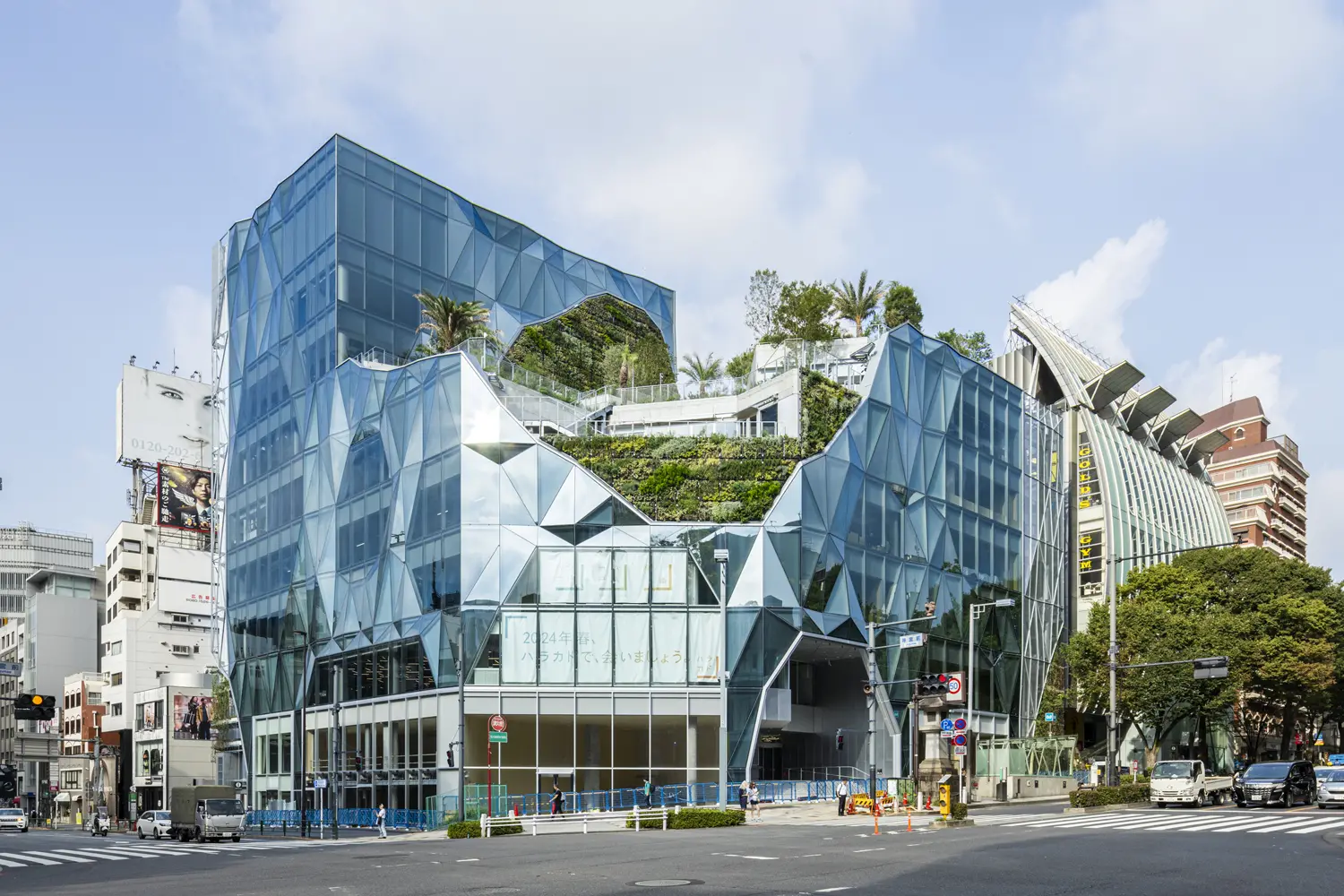
Aoyama represents a quieter form of wealth.
There are no giant gates announcing entry into a luxury residential district. Instead, prestige reveals itself gradually: a beautifully designed low-rise apartment building, an embassy wall, a private residence hidden behind landscaping, an architectural boutique or an exceptional restaurant occupying an otherwise anonymous side street.
This understated sophistication is what makes Aoyama one of Tokyo’s most distinctive prime real estate markets.
More Than Omotesando
International visitors often associate Aoyama with Omotesando and its concentration of fashion flagships.
That is only one layer of the neighborhood.
The broader Aoyama area encompasses Kita-Aoyama and Minami-Aoyama, extending from the commercial energy of Omotesando and Aoyama-dori into remarkably quiet residential streets.
Official Tokyo tourism guidance characterizes Aoyama and Omotesando as an upper-class center of art, architecture, high fashion and sophisticated dining, with internationally known architectural works appearing throughout the area.
This intersection of commerce, design and residential life gives Aoyama a character unlike almost anywhere else in central Tokyo.
Architecture as Part of the Neighborhood
In Aoyama, architecture contributes directly to the identity of the district.
Buildings by internationally recognized architects stand beside experimental retail spaces, galleries and carefully designed private residences.
This creates a visual culture that influences the real estate market itself.
A buyer purchasing a luxury residence in Aoyama is not simply buying proximity to central Tokyo. They are buying into an environment where design is treated as part of everyday life.
This is particularly evident in Minami-Aoyama.
Here, some of Tokyo’s most compelling residential properties are not necessarily the tallest or newest buildings. Low-rise luxury condominiums, architect-designed houses and private plots can be more desirable precisely because they feel personal and difficult to reproduce.
Minami-Aoyama
For residential buyers, Minami-Aoyama is generally the most important part of the wider district.
The area combines access to Omotesando, Roppongi, Hiro-o and Nishi-Azabu with quieter pockets of premium housing.
The atmosphere can change significantly between blocks.
One street may contain restaurants and boutiques.
A few minutes away, the environment may be almost entirely residential.
This creates opportunities for buyers seeking genuine centrality without the density of a tower-dominated neighborhood.
Land is particularly interesting.
A sufficiently large, well-positioned site in Minami-Aoyama can support something increasingly rare in central Tokyo: a substantial private residence designed around the owner's own architecture rather than the predetermined layout of a condominium.
For ultra-prime buyers, that possibility has considerable value.
Kita-Aoyama
Kita-Aoyama has a more commercial character in many locations.
Its proximity to Omotesando, Aoyama-dori and Gaienmae gives it exceptional visibility and transportation access.
Office, showroom, retail and mixed-use properties can therefore be particularly interesting.
Rather than treating all of Aoyama as a residential luxury market, investors should distinguish carefully between commercial streets and residential backstreets.
The appropriate valuation logic can be completely different.
Living in Aoyama
Aoyama works particularly well for people who want central Tokyo to feel sophisticated rather than hectic.
Shibuya is nearby.
Roppongi is nearby.
Akasaka is nearby.
Yet Aoyama maintains a sense of composure.
Restaurants and cafés are dispersed throughout the neighborhood rather than concentrated entirely inside large complexes. Galleries, museums, fashion and architecture become part of ordinary walking routes.
The result is a lifestyle that feels less institutional than living inside a major mixed-use development.
For many buyers, that is precisely the attraction.
Investment Perspective
Aoyama is fundamentally a scarcity market.
Large redevelopment sites are difficult to assemble.
Premium residential land rarely appears.
High-quality low-rise condominiums have limited supply.
These characteristics can support long-term value, particularly for genuinely exceptional properties.
However, investors must be selective.
“Aoyama” on an address is not sufficient.
Road width, building orientation, neighboring structures, zoning, slope, sunlight, distance from Omotesando and the quality of the immediate streetscape can have substantial effects on value.
A truly superior Aoyama property often derives part of its value from characteristics that do not appear in basic market statistics.
Who Is Aoyama For?
For residents, Aoyama is particularly suited to buyers who prioritize:
privacy;
architecture;
fashion and culture;
walkability;
low-rise luxury;
and proximity to central Tokyo without living inside a major commercial core.
For investors, it is better understood as a long-term quality market than as a high-yield market.
Exceptional Aoyama real estate is expensive because it combines several things Tokyo cannot easily create more of: land, centrality, design culture and privacy.
Aoyama is where Tokyo luxury becomes less about displaying wealth and more about exercising taste.